← Interactive guidePUBLIC RECORD / READING EDITIONOffline ZIP ↓

The John Birch Society / 1945–2026

The enemy within.

How did a small anti-communist organization turn distrust of government into a durable political method—and how far does its influence really reach?

An independent, AI-written documentary guide. Sources are linked throughout. This guide is not affiliated with the John Birch Society or The AI Files.

Scope & method / Edition 1.2

A guide to an organization. And to the limits of inference.

The narrative concentrates on the founding and the conflicts of 1958–1968. Later publications and present-day self-descriptions trace continuity; they do not establish an unbroken chain of control over American conservatism.

Read the chapters for a narrative; use the record below to test it. Established means the specific proposition is documented. Interpretation marks an inference or a historical argument. Unknown means the record here cannot decide. An archive’s possession of a document does not endorse its contents.

Research cutoff: 25 October 2026. This is a curated introduction, not a complete history of every chapter or member. No independent current membership count, comprehensive local archive survey, or full-text audit of every book is claimed.

01 / The record

The story

The complete narrative, followed by the supporting record.

Joseph McCarthy.jpg
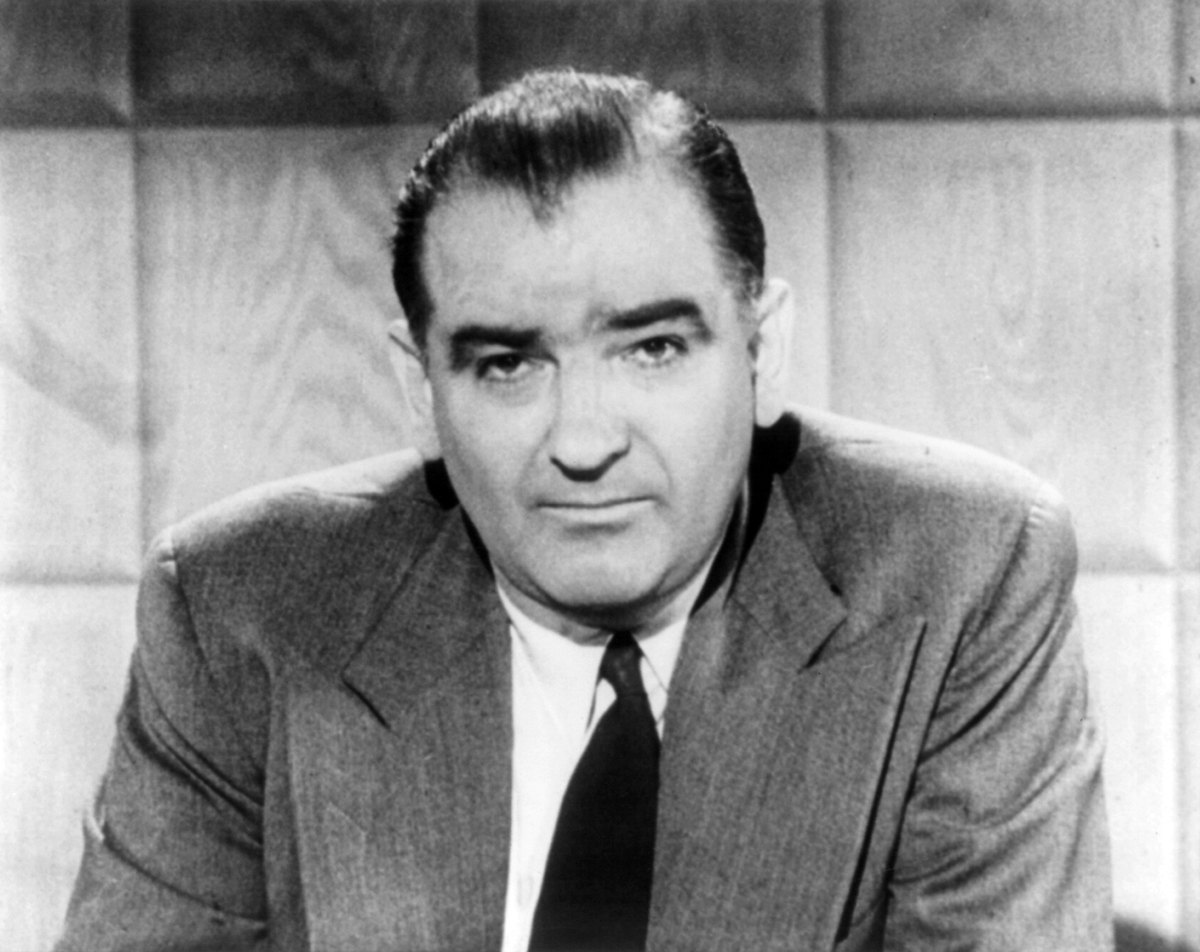
Senator Joseph McCarthy. The Society was founded after his rise and fall; he was neither its founder nor its namesake. Image credit ↗

Chapter 01 / 1945–1958

A Cold War, brought home

The name came before the organization. John Birch, an American missionary who served in military intelligence in China, was killed by Chinese communist soldiers in August 1945. More than a decade later, Robert Welch made Birch a symbol of a conflict that, in Welch’s telling, Americans had not understood soon enough. Calling him an early martyr of the Cold War gave the new Society a moral starting point. It did not mean Birch had founded, joined, or endorsed a group created after his death.

The international setting mattered. Communist governments and Soviet power presented real challenges to the United States. Domestic arguments about espionage, loyalty, and security made those challenges part of everyday American politics. But evidence of particular spies did not establish that every policy setback was sabotage. The distance between those two propositions became the fault line running through Welch’s movement: how could a reader tell a documented act of subversion from a theory broad enough to explain almost anything?

Welch supplied an organization as well as an answer. On December 9, 1958, he founded the John Birch Society in Indianapolis. The retired candy businessman addressed a small gathering of businessmen in a lengthy presentation later published as the Blue Book. Instead of building a conventional electoral party, the Society developed small local chapters under national direction. Reading, meetings, literature distribution, and organized pressure could connect people who felt isolated by the political consensus around them.

That structure is the first fact to keep in view. A provocative accusation could attract attention, but recurring local work could keep an organization alive after the headlines moved on. The founding was therefore both an ideological event and an organizational one. Explaining the Society solely as an eruption of fear misses the machinery; explaining it solely as civic education misses the accusations that gave the machinery its distinctive purpose. The rest of this guide follows the interaction between the two.
Sources: S06 · S07 · S14 · S16 · S17

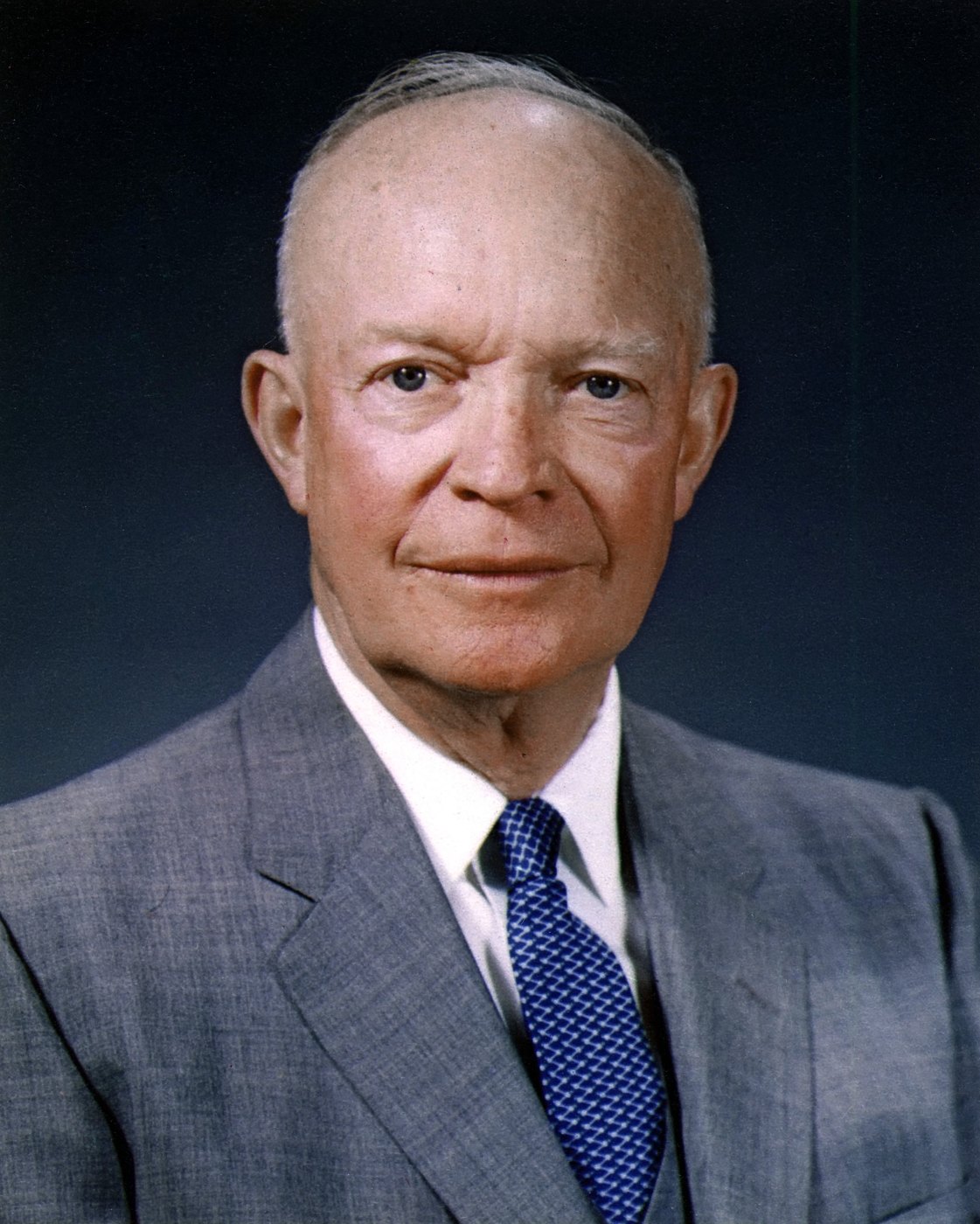
Dwight D. Eisenhower, official photo portrait, May 29, 1959.jpg
Dwight D. Eisenhower, official White House portrait, 1959. Welch’s accusation against the Republican president became a defining controversy. Image credit ↗

Chapter 02 / 1958–1963

When disagreement became evidence

Dwight Eisenhower should have been an unlikely target for a movement that presented itself as the defender of America against communism. He was a Republican president and a celebrated military commander. Yet Welch’s account of American decline reached into the presidency itself. Writings circulated before their publication as The Politician portrayed Eisenhower as knowingly serving the communist conspiracy. The important question is not whether Welch disliked Eisenhower’s policies. It is whether those policies established the concealed allegiance Welch alleged. They did not.

A policy record can be criticized without making its author a foreign agent. Disagreement over international institutions, the size of government, or the conduct of the Cold War does not by itself demonstrate treason. Welch’s inference moved from outcomes he considered disastrous to a conclusion about intentional betrayal. For sympathetic readers this supplied an explanation for why electoral victories had not reversed the changes they feared. For critics, including other conservatives, it replaced political analysis with an accusation that its evidence could not sustain.

The Society’s retrospective defense places the Eisenhower controversy in the context of Welch’s private correspondence and the treatment of that writing by opponents. That context belongs in the record. A private draft, a public book, and an official organizational resolution are different kinds of evidence. Yet the distinction does not erase the substance of Welch’s allegation or make it well supported. Nor does proof that critics were hostile establish that they were following a coordinated communist plan. Those are separate propositions requiring separate evidence.

This is why the controversy matters beyond one president. If a leader’s disagreement is always evidence of secret loyalty to the enemy, ordinary correction becomes difficult. Contrary evidence may be dismissed as part of the concealment, and critics may become further suspects. Readers need not accept every criticism of the Society to recognize that problem. The strongest account separates a legitimate debate over policies from a far stronger claim about hidden control, then asks what affirmative evidence would be needed to bridge the gap.

Sources: S04 · S06 · S08 · S16 · S20

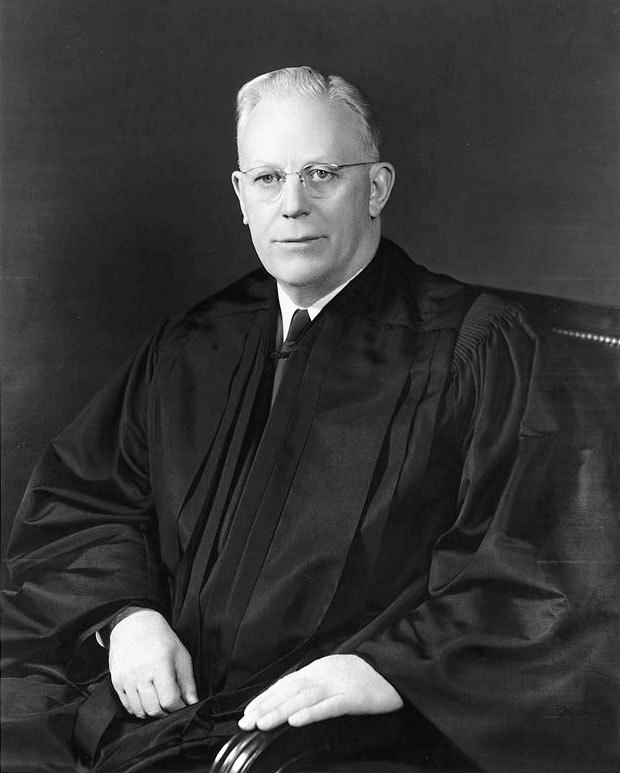
Earl Warren.jpg
Chief Justice Earl Warren, photographed by Harris & Ewing. The “Impeach Earl Warren” campaign made the Court a visible target. Image credit ↗

Chapter 03 / 1960s

The fight moved into public life

The Society’s public life was not limited to Welch’s books. Its campaigns turned an overarching account of subversion into recognizable local actions. Opposition to the United Nations and a drive to impeach Chief Justice Earl Warren brought arguments about sovereignty and constitutional government into meetings, letters, signs, and printed literature. These were concrete political interventions. Describing the group as educational does not make such interventions apolitical, just as its political effects do not establish that every member had the same motives.

Warren was a particularly revealing target. The Supreme Court stood at the center of disputes over federal authority, civil rights, criminal procedure, and the meaning of the Constitution. Society supporters could describe their opposition as a defense of constitutional limits. But the historical record also requires attention to whose rights and whose authority were being contested. The Library of Congress’s account connects the Society’s anti-communism to its opposition to civil rights and documents the campaign against the chief justice. A constitutional vocabulary did not settle the consequences of those positions.

Two levels of evidence must remain distinct. A surviving campaign item shows that an argument was circulated. It does not automatically measure how many people agreed, how many joined the Society, or how much a particular election result depended on that campaign. Contemporary opponents sometimes published confident estimates of membership and influence. Those estimates help reconstruct the atmosphere of conflict, but they should be attributed rather than converted into an exact, audited census. Visibility, membership, and causal power are three different measures.

The Society’s own current description of locally organized chapters following a national agenda helps explain the persistence of its model. A national issue could become a repeated neighborhood task. Critics saw an organized challenge to public institutions; participants could experience the same activity as a defense of self-government. An adequate history has to register both the participants’ account of their purpose and the record of what their campaigns sought to do. Treating either perspective as the whole story makes the organization harder, not easier, to understand.

Sources: S01 · S02 · S07 · S11 · S19 · S20

Barry Goldwater photo1962.jpg
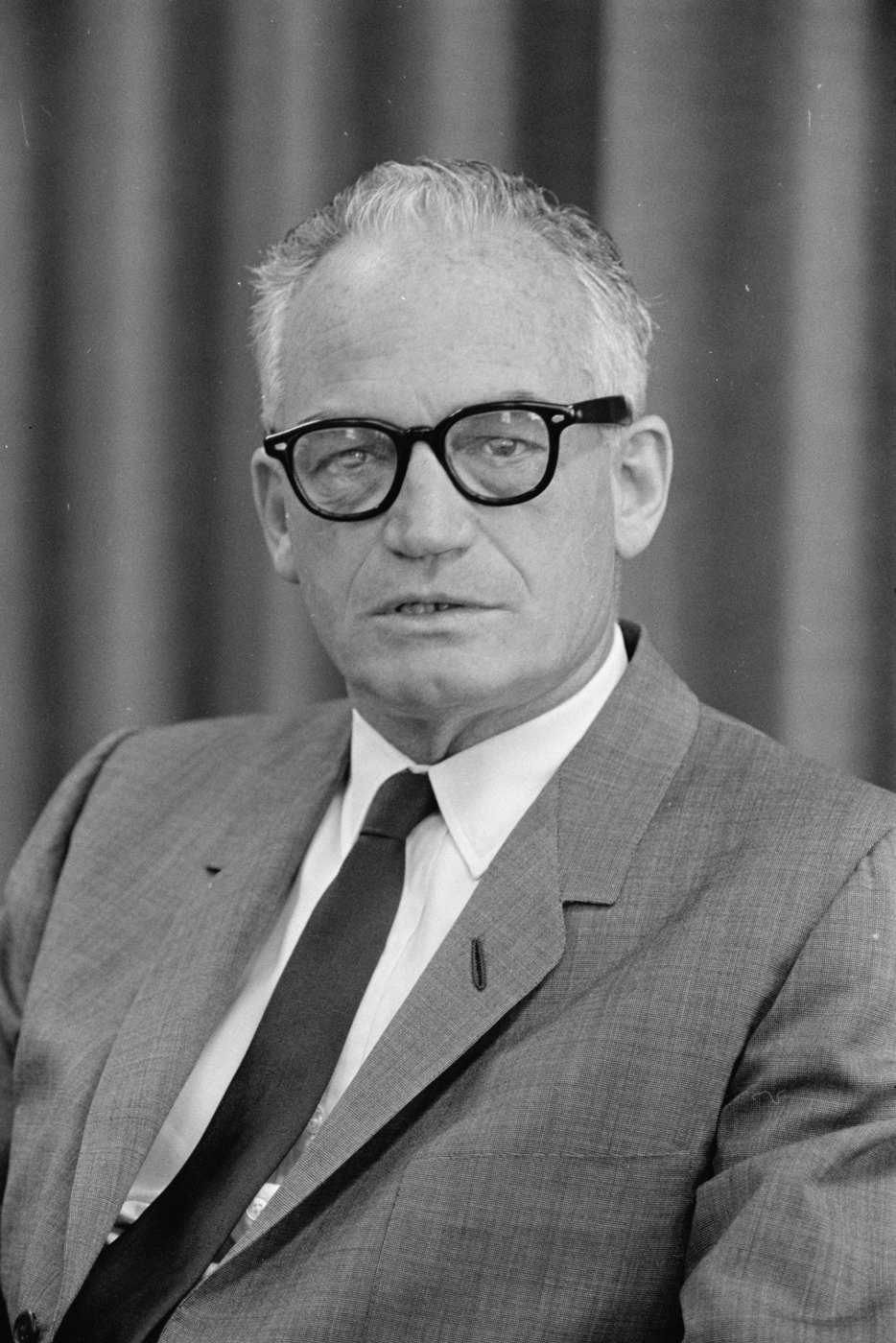
Barry Goldwater, September 1962, photographed by Marion S. Trikosko. Shared conservative constituencies complicated attempts to isolate Welch. Image credit ↗

Chapter 04 / 1962–1971

A boundary that would not hold neatly

The conflict with William F. Buckley Jr. was a dispute inside anti-communist conservatism. In February 1962, National Review published The Question of Robert Welch, an attack on Welch’s judgment and leadership. That intervention mattered: a conservative editor was challenging a prominent anti-communist organizer from within a broadly shared political world. But the editorial should not be mistaken for an order that could dissolve the Society or remove its members from every other institution in which they participated.

The distinction between Welch and his followers was politically important. Rejecting a leader’s allegations while retaining the goodwill of committed conservative activists offered a possible way to police a boundary without abandoning a constituency. Archival scholarship complicates the familiar picture of a clean expulsion. Verhoeven’s study describes members defending Welch after the editorial and correspondence revealing anxiety about attacks on the leader. These responses show that the attempted boundary was contested by people with loyalties, relationships, and their own understanding of the organization.

The later broadcast record makes the disagreement tangible. In January 1968, Buckley interviewed Slobodan Draskovich, a charter member who had publicly resigned in 1966. The archive describes a discussion about whether a flawed organization still did more good than harm. Draskovich’s departure is evidence of an internal break; it is not evidence that all members followed him. A 1971 Firing Line episode returned to the Society and the American right, illustrating that the question remained live years after the first major editorial confrontation.

This leaves two conclusions that can coexist. Buckley’s rejection was real and consequential as a public statement. The Society’s persistence means that the rejection was not a complete social or organizational quarantine. Later historians differ over how much weight to give that persistence when explaining the modern right. The careful question is where continuity can actually be traced: particular organizers, correspondence, campaigns, institutions, or recurring ideas. Similar language alone cannot supply all the missing links, and a famous editorial cannot make those links disappear.

Sources: S08 · S09 · S10 · S12 · S13

John F. Kennedy, White House color photo portrait.jpg
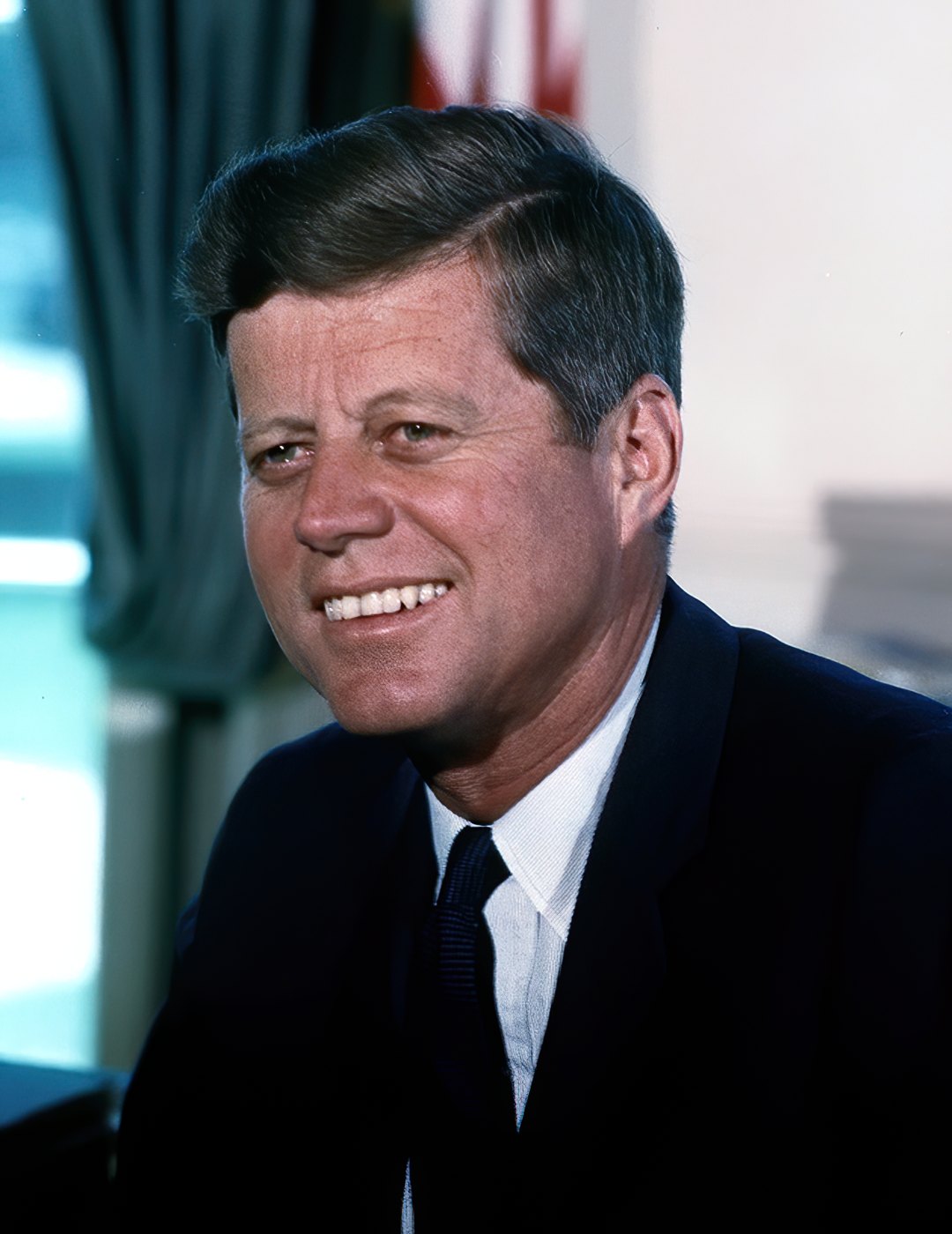
President John F. Kennedy, White House portrait by Cecil Stoughton. Political hostility and responsibility for an assassination are different claims. Image credit ↗

Chapter 05 / 1963

Hostility is not a murder case

A guide to a movement built around accusations needs a rule for handling accusations against the movement itself. John Kennedy’s assassination in November 1963 makes that rule especially important. The Society opposed Kennedy’s administration and policies. That political fact belongs to the history of the period. It does not, by itself, show that the organization planned, directed, or participated in his murder. The evidence required to establish a criminal conspiracy is different from the evidence required to establish a hostile political climate.

The Society’s present-day rebuttal reproduces a statement of sympathy attributed to Welch and says it favored constitutional means of opposition to Kennedy. That is relevant evidence about how the organization presents its public position. It is not a substitute for independently evaluating any specific allegation. Equally, a reader cannot dismiss the statement merely because its author had been a fierce opponent of the president. A statement, an action, a relationship, and an inference each have a different evidentiary role.

The same discipline applies when using local newspaper collections or research reports. An archive can establish that a report was published, that an organization existed, or that a controversy was recorded. It does not automatically validate every accusation preserved in its folders. Finding aids are maps to material, not verdicts. Researchers who want to move from a general account of extremism to a claim of direct responsibility need identifiable acts, credible records, and a chain connecting those acts to the allegation being made.

This chapter therefore marks a limit rather than offering a new assassination theory. The sources assembled here do not establish Society responsibility for Kennedy’s death. That conclusion is narrower than claiming to have disproved every possible allegation about every individual who ever encountered the organization. It is also stronger than simply suspending judgment because an accusation sounds dramatic. The standard applied to Welch’s charges against Eisenhower should remain in place when the direction of suspicion reverses: association, hostility, and a compelling story cannot do the work of missing evidence.

Sources: S04 · S06 · S07 · S21

March on Washington edit.jpg
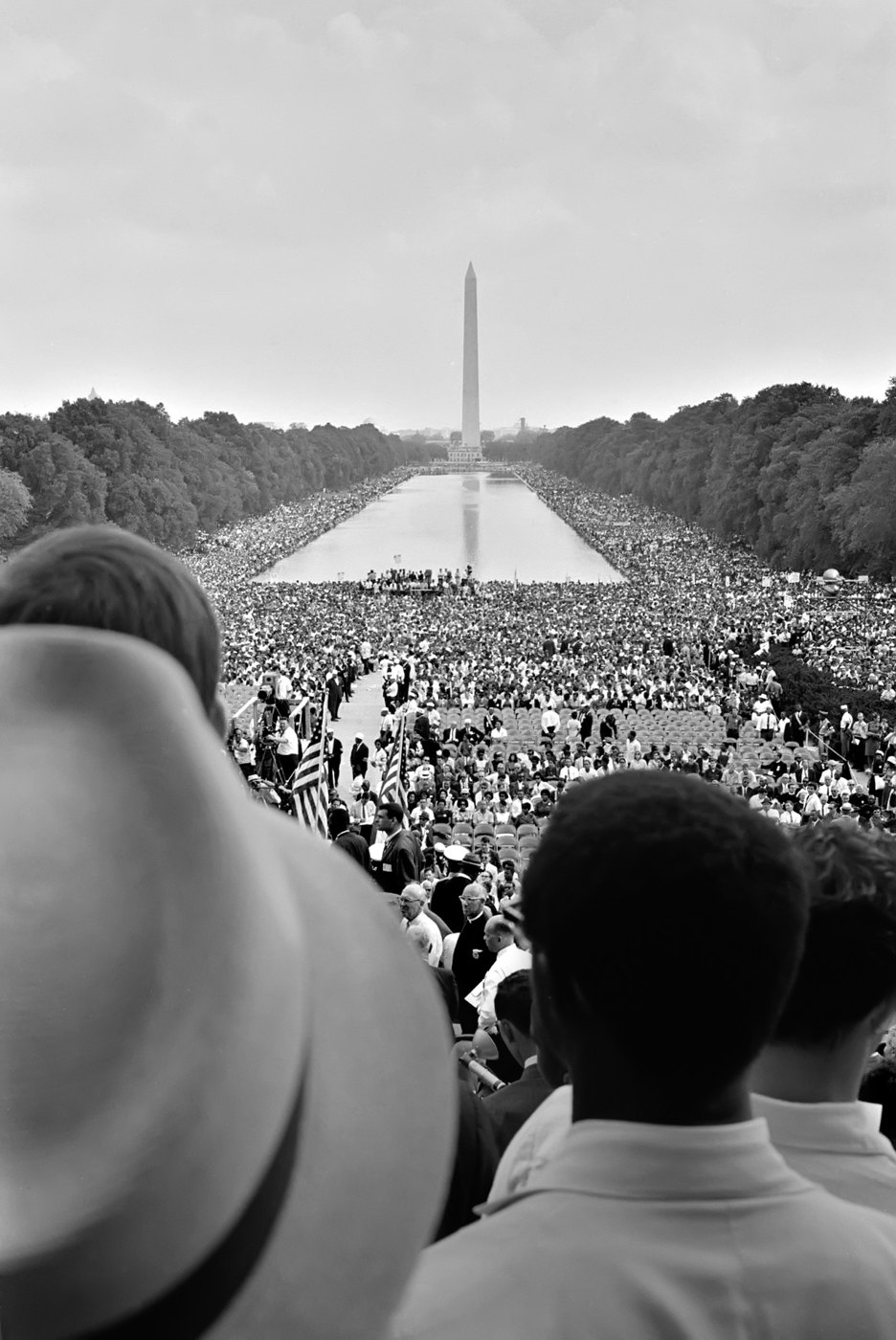
The 1963 March on Washington. Civil-rights activism was an independent democratic movement; depicting it as subversion was a political interpretation, not a fact established by this photograph. Image credit ↗

Chapter 06 / 1960s–2026

What survived the Cold War?

The Soviet Union’s disappearance did not end the John Birch Society. The organization continued to publish, organize, and describe its work as a defense of constitutional liberty. Its historical timeline records later developments in its publications and communications, while its current website retains the model of local chapters following a national agenda. Those pages establish an institutional afterlife. They do not tell us exactly how many active members it has today or how much leverage it exercises in a particular legislature.

The survival of a method is a larger question than the survival of an organization. Miller’s biography presents Welch as an important architect of a conspiratorial strain within American conservatism. The Library of Congress’s discussion of Dallek’s research likewise draws attention to mobilization and conflict with established media. These are historical interpretations with supporting research programs, not direct measurements of present-day control. Their value is to challenge a story in which the Society was marginal, was repudiated, and therefore ceased to matter.

There is a danger in replacing that tidy dismissal with an equally tidy genealogy. Contemporary distrust of institutions has many sources. Similar accusations can travel without a formal connection, and people can arrive at similar arguments through different experiences. To show an organizational inheritance, a historian needs a trail: personnel, money, documents, training, publications, or demonstrable transmission. A resemblance may be the beginning of an investigation. It cannot be its conclusion. The theories section makes that distinction explicit rather than asking readers to choose between total irrelevance and total influence.

The most durable finding in this guide is therefore a relationship between means and belief. A small, centrally coordinated network gave people repeatable ways to act, while a narrative of hidden betrayal explained why the struggle seemed never to end. That combination could outlive a single controversy or geopolitical moment. Its history is worth reading neither as a morality play about foolish outsiders nor as proof that every warning was vindicated. It is a study of how conviction becomes organization—and of the evidentiary limits that responsible political argument has to preserve.

Sources: S01 · S02 · S05 · S11 · S12 · S15 · S18

03 / The record

People, not a single cast of mind

Open a record for the person’s role and supporting sources. Portraits appear only where a verified public-domain photograph is included.

WelchBiographical record
Robert W. Welch Jr.Founder and organizer · 1899–1985

The retired candy businessman who founded the Society in 1958 and supplied its central worldview. His writings and organizational leadership are central evidence; his accusations require testing independently of his sincerity.

Sources: S05 · S12 · S14

BirchBiographical record
John BirchNamesake · 1918–1945

An American missionary and military intelligence officer killed in China in 1945. Welch later made his death a founding symbol. Birch did not belong to the organization named for him thirteen years later.

Sources: S16 · S17

Dwight D. EisenhowerDwight D. EisenhowerPresident and target · 1890–1969

The Republican president Welch accused of knowingly aiding a communist conspiracy. Disagreement with his policies did not substantiate that allegation.

Sources: S04 · S08 · S16

Earl WarrenEarl WarrenChief justice and campaign target · 1891–1974

The Society helped organize a campaign to impeach the chief justice. Its literature turned the Court’s constitutional decisions into a recurring mobilizing issue.

Sources: S11 · S20

BuckleyBiographical record
William F. Buckley Jr.Conservative editor and critic · 1925–2008

National Review’s editor challenged Welch in 1962. His later Firing Line discussions show an ongoing argument among anti-communists over the Society’s costs and value.

Sources: S08 · S09 · S10

Barry GoldwaterBarry GoldwaterConservative political figure · 1909–1998

The Arizona senator’s conservative constituency overlapped the world in which the Society organized. Overlap must not be treated as proof of Society membership or direction of his campaign.

Sources: S12 · S13

DraskovichBiographical record
Slobodan DraskovichCharter member, then dissenter · 1910–1982

A charter member who publicly resigned in 1966 and explained his criticisms in a 1968 Firing Line interview. His experience illustrates dissent within the anti-communist constituency.

Sources: S09

04 / The record

A chronology of conflict

Horizontal spacing shows elapsed time; separate rows keep close events selectable. Scroll the graph on narrow screens. Exact dates are attributed where records conflict; month- and year-only dates preserve source precision.

19451965198520052026
John Birch is killedOrigins

Birch’s death in China later becomes Welch’s symbolic starting point. The organization does not yet exist.

Sources: S17

Welch founds the SocietyOrganization

A small Indianapolis gathering launches the organization; Welch’s presentation becomes the Blue Book.

Sources: S01 · S14

Local chapters take shapeOrganization

The Society’s own timeline dates its first Greater Boston chapters to February 1959.

Sources: S01

National scrutiny intensifiesConflict

Contemporaneous material in the Congressional Record describes Welch’s organization and the controversy surrounding it. Month-level date, not a single founding event.

Sources: S07

National Review challenges WelchConflict

The Question of Robert Welch makes a major conservative challenge public.

Sources: S08

The Politician appears as a bookClaims

The Society dates the book publication to March 1963, distinguishing it from earlier private circulation.

Sources: S01 · S04

Kennedy is assassinatedContext

The Society later cites Welch’s sympathy statement; prior political hostility does not establish participation in the crime.

Sources: S04

Draskovich publicly leavesConflict

A charter member resigns, according to the archive’s account of his subsequent interview. Year-level precision.

Sources: S09

A former member speaks on Firing LineMedia

Buckley and Draskovich discuss leadership and the judgment to remain or leave. The archive offers a transcript.

Sources: S09

Firing Line returns to the argumentMedia

The Society and the American right remain subjects of debate.

Sources: S10

Welch’s later worldview on filmMedia

The Society’s founder page links a 1974 speech; it should be read as an advocacy source.

Sources: S05

Welch diesOrganization

The founder’s death does not end the organization. Year-level date used here.

Sources: S12 · S15

JBS.org launchesOrganization

Date supplied by the Society’s retrospective timeline.

Sources: S01

A new biography reopens the legacy debateMemory

Miller’s A Conspiratorial Life argues for Welch’s lasting importance. Publication year, not proof of every continuity claim.

Sources: S12

Birchers discussed at the Library of CongressMemory

A recorded research discussion examines Dallek’s work and the archival record.

Sources: S18

Guide’s research cutoffMemory

The current website shows an active organization; no independently audited contemporary membership total is asserted.

Sources: S02

05 / The record

The load-bearing facts

Six steps that any serious interpretation has to handle. Open each step for its dependencies, why it matters, and the questions it leaves for rival accounts.

P1

Symbol becomes organization

Birch’s death precedes the Society by thirteen years; Welch turns remembrance into an organizing identity.

Why it is critical

Without that distinction, the namesake can be mistaken for a founder and a retrospective interpretation for a wartime fact.

Dependencies

No earlier step. This establishes the starting chronology.

What rival readings must explain

Every reading must explain why Welch chose this death as a political symbol.

Sources: S01 · S17

P2

Small chapters, national direction

The organization supplies repeatable local work under central guidance.

Why it is critical

If this structure is omitted, later survival appears to depend only on headlines and famous statements.

Dependencies

Depends on P1: an organization has actually been formed.

What rival readings must explain

The marginal-fringe account must still explain organizational persistence; the influence account must show mechanisms.

Sources: S02 · S06 · S07

P3

Suspicion becomes an allegation of hidden control

Welch treats policy outcomes as signs of intentional betrayal, most famously in the Eisenhower controversy.

Why it is critical

Removing this step turns an unusual theory of politics into generic limited-government advocacy.

Dependencies

Depends on P2 for how the interpretation could be circulated.

What rival readings must explain

A sympathetic account must supply affirmative evidence for the accusation; a critical account must distinguish unsupported intent from legitimate policy debate.

Sources: S04 · S08 · S16

P4

Campaigns translate belief into pressure

The Warren and United Nations campaigns make the worldview visible through specific public demands.

Why it is critical

Without actions, ideological influence becomes impossible to distinguish from rhetoric alone.

Dependencies

Depends on P2 and P3: machinery plus a reason to act.

What rival readings must explain

Every interpretation must address campaign objectives and effects, including civil-rights conflicts, rather than only stated motives.

Sources: S11 · S20

P5

Rejection does not erase overlap

The Buckley break is real, but later internal dissent and public debate show an incomplete boundary.

Why it is critical

A story of total expulsion cannot explain the continuing organization; a story of no boundary cannot explain the public break.

Dependencies

Depends on P3 and P4: the controversy concerns both allegations and their political costs.

What rival readings must explain

The strongest interpretations accept the editorial and persistence together, then disagree over their relative weight.

Sources: S08 · S09 · S10 · S13

P6

Afterlife requires evidence of transmission

Later continuity must be traced through institutions or documents, not resemblance alone.

Why it is critical

Without this requirement, either present-day influence or complete irrelevance can be asserted without testing.

Dependencies

Depends on P2 through P5. Continuity is the question to investigate, not the answer supplied by chronology.

What rival readings must explain

An inheritance thesis must identify a trail; an isolation thesis must explain the continuing activity and scholarship.

Sources: S01 · S02 · S12 · S18

06 / The record

Four ways to read the record

Competing interpretations, stated at their strongest and tested against the same chain. Presenting a theory is not endorsing it.

Interpretation 01

A constitutional education movement

Supported as self-description; incomplete as history

The strongest version

Members sought limited government, sovereignty, and constitutional restraints, using education and local action rather than forming a new political party.

Accepts

P1–P2 and the existence of public campaigns in P4.

Must still explain

Must account for the specific hidden-control accusations in P3 and the civil-rights implications of P4. A mission statement cannot settle those questions.

Assessment

The current mission and chapters establish how the Society describes itself. They do not independently validate Welch’s accusations.

Sources: S02 · S03 · S04 · S11

Interpretation 02

A fringe checked by conservative gatekeepers

A real boundary; an overstated ending

The strongest version

Buckley’s rejection damaged Welch’s standing and drew an important distinction between anti-communism and unsupported allegations.

Accepts

P3 and the editorial intervention in P5.

Must still explain

Must explain the continued organization in P2/P6 and evidence of members resisting the attempted boundary.

Assessment

The 1962 editorial and later dissent support a genuine rupture. The 1968 and 1971 discussions resist a story of immediate disappearance.

Sources: S08 · S09 · S10 · S13

Interpretation 03

An enduring contributor to the American right

Substantial historical argument; extent disputed

The strongest version

The Society’s networks and account of hidden betrayal helped sustain a political tradition that outlived the first Cold War controversies.

Accepts

P2–P6, especially the interaction of organization and ideas.

Must still explain

Must demonstrate particular channels of transmission and avoid treating all modern distrust as a Society product.

Assessment

Miller and Dallek’s research challenge the clean-purge account. Their interpretations do not establish that today’s right is centrally controlled by the Society.

Sources: S11 · S12 · S18

Interpretation 04

A single hidden command behind national decline

Not established by the assembled record

The strongest version

From Welch’s perspective, repeated policy defeats that crossed party lines looked coordinated rather than accidental.

Accepts

That the events and disputes in P3/P4 occurred.

Must still explain

Must bridge policy outcomes to identifiable coordination, agency, and intent. Treating every objection as further proof makes the proposition untestable.

Assessment

The Society’s advocacy establishes that this interpretation was promoted; it does not prove the overarching plot.

Sources: S04 · S05 · S08 · S20

07 / The record

How the story changed

Public memory tends to compress contested histories into a turning point. The records leave a less tidy sequence.

1945 → 1958 · A death becomes a founding story

ThenA wartime death in China.

ReconsideredWelch’s later framing turns Birch into a Cold War symbol. The framing is a later historical act, not something the name alone proves.

Sources: S01 · S17

1962 → 1971 · From editorial break to continuing argument

ThenBuckley’s public attack offers a memorable boundary-setting moment.

ReconsideredFormer members’ testimony and later debates show a more contested boundary. The break happened; the clean ending did not.

Sources: S08 · S09 · S10 · S13

Older summaries → 2021–2023 · Obscurity reconsidered

ThenSome retrospective accounts emphasize decline and obscurity after Welch.

ReconsideredRecent scholarship asks whether this misses the persistence of ideas and organizing. New questions revise emphasis without making every continuity claim a demonstrated fact.

Sources: S15 · S12 · S18

08 / The record

What the evidence supports

Ratings apply to the precise proposition on the page. Unsupported means the assembled evidence does not establish a claim; it is not interchangeable with false.

Established

The Society was founded in 1958.

The Indianapolis founding on December 9 is corroborated across the organizational and historical sources.

Sources: S01 · S14 · S16

False

John Birch founded the Society.

Birch died in 1945. Welch founded the organization in 1958 and named it after him.

Sources: S01 · S17

Established

Welch accused Eisenhower of consciously serving communism.

The existence of Welch’s accusation is distinct from its truth. Its circulation and the resulting controversy are documented.

Sources: S04 · S08 · S16

Unsupported

Eisenhower was a communist agent.

The assembled record supplies no substantiation for the allegation. Policy disagreement and unwanted outcomes do not prove covert allegiance.

Sources: S08 · S16

Established

The Society helped campaign to impeach Earl Warren.

The campaign is documented in archival accounts and contemporaneous criticism.

Sources: S11 · S20

False

Buckley’s criticism made the Society disappear.

Later broadcasts, scholarship, and the organization’s continued activity contradict literal disappearance. That does not imply Buckley had no influence.

Sources: S09 · S10 · S02

Established

The organization describes itself as non-partisan.

This accurately reports the present mission page. It does not establish neutrality or the absence of political activity.

Sources: S02

Not established

The Society directed Kennedy’s assassination.

These sources do not establish such a chain of responsibility. Hostility to a president is not evidence of directing his murder.

Sources: S04 · S21

Overstated

Every modern conservative movement descends directly from JBS.

Historical influence is a serious research question, but a universal lineage needs evidence that resemblance alone cannot supply.

Sources: S12 · S13 · S18

Unknown

We know an exact, audited current membership total.

No independent current membership audit is included here. Historical estimates, the Society’s claims, and active web pages are not equivalent to a verified contemporary count.

Sources: S02 · S06 · S19

09 / The record

Hear the argument

Recorded voices, reported history, and documentary context. External media need an internet connection.

Primary broadcast transcript · 50-minute episode

Inside the dispute: Firing Line, 1968 ↗

Buckley interviews Draskovich after his departure. The archive currently identifies transcript access; do not expect a streaming player.

Primary advocacy video · hosted by the Society

Welch’s later argument, 1974 ↗

Listen to the founder’s account of hidden power in his own terms. A prediction being recorded is not evidence that it came true.

Recorded Library of Congress research discussion

The archival reassessment, 2023 ↗

Dallek discusses Birchers and the collections behind it. The linked Library blog embeds the recorded program.

10 / The record

The questions still open

A documented limit is more useful than a confident number or a sweeping lineage the evidence cannot carry.

  1. How large was active participation, as distinct from mailing lists, subscribers, and sympathizers, in each decade?
  2. Which local campaigns can be connected to a measurable policy result through records beyond the Society’s own claims?
  3. Where can later political rhetoric be traced to identifiable Society publications, people, or training?
  4. How did members’ experiences differ by place, religion, race, and decade? A national mission statement cannot answer this alone.

11 / The record

Go back to the sources

Records, reporting, and firsthand accounts have different evidentiary roles. Each source note explains what it can establish and where caution is needed. Sources consulted for this edition on 25 October 2026; publisher restrictions may apply.

  1. S01

    Organizational primary source

    Timeline and History ↗

    The John Birch Society

    The Society’s account of its founding, campaigns, publications, and survival. Useful for what it claims and when it says it acted; not independent verification of its explanations.

  2. S02

    Organizational primary source

    Who We Are ↗

    The John Birch Society

    Current mission and chapter structure. The organization describes itself as non-partisan; that is its self-description, not a finding that it has no political effects.

  3. S03

    Organizational primary source

    Frequently Asked Questions ↗

    The John Birch Society

    Founding and constitutional claims, stated in the organization’s own terms.

  4. S04

    Organizational primary source

    Myths vs Facts ↗

    The John Birch Society

    The Society’s defense of Welch, its response to criticism, and its account of its reaction to Kennedy’s death. Claims about hostile coordination require evidence beyond this page.

  5. S05

    Organizational primary / video

    Founder: Robert Welch ↗

    The John Birch Society

    Founder biography and linked 1974 speech. The speech is evidence of Welch’s worldview, not proof that his predictions or accusations were correct.

  6. S06

    Government research report, 1961

    The John Birch Society: History, Organization, Principles and Activities ↗

    Library of Congress Legislative Reference Service / UNT Digital Library

    A contemporary research report. Read the scanned pages alongside the OCR; historical estimates and descriptions are not a current membership census.

  7. S07

    Contemporaneous public record

    Congressional Record, Senate, March 1961, p. 4961 ↗

    U.S. Government Publishing Office

    Contemporary reporting entered in the Senate record describes small chapters and centrally appointed leaders. Reprinted articles remain the articles’ claims; insertion in the Record does not certify them.

  8. S08

    Conservative primary editorial

    The Question of Robert Welch, 13 February 1962 ↗

    National Review

    Buckley’s conservative challenge to Welch. The publisher’s online access may be restricted; the dated editorial is also discussed in the linked archival scholarship.

  9. S09

    Primary broadcast transcript

    The John Birch Society, Firing Line, 8 January 1968 ↗

    Hoover Institution / American Archive of Public Broadcasting

    Buckley interviews former charter member Slobodan Draskovich about his 1966 departure. The archive currently describes a digitized transcript, not streaming video.

  10. S10

    Primary broadcast archive

    The John Birch Society and the American Right, 2 March 1971 ↗

    Hoover Institution

    Episode record for Buckley’s discussion with Gerald Schomp and Peter Koltypin; useful for debates among anti-communists, after the first public split.

  11. S11

    Archival interpretation, 2023

    Made at the Library: How the John Birch Society Radicalized the American Right ↗

    Ryan Reft / Library of Congress

    Archival context for the Warren campaign and Dallek’s research. Distinguish the historian’s argument from the documents described.

  12. S12

    Scholarly biography, 2021

    A Conspiratorial Life ↗

    Edward H. Miller / University of Chicago Press

    Publisher’s description, contents, and excerpt of Miller’s biography. Used for its stated interpretation; this guide does not claim a page-by-page audit of the full book.

  13. S13

    Archival scholarship, 2015

    The Rearguard of Freedom, doctoral thesis ↗

    K. Verhoeven / University of Nottingham

    Includes correspondence surrounding the Buckley–Welch dispute, including members’ responses (printed p. 169 and surrounding chapter).

  14. S14

    State historical account

    Roots of the John Birch Society ↗

    North Carolina Department of Natural and Cultural Resources

    Founding context and Welch’s North Carolina background.

  15. S15

    Historical encyclopedia

    John Birch Society ↗

    NCpedia / Encyclopedia of North Carolina

    Retrospective account of the organization. Its older assessment of obscurity must be read with its publication context, not treated as a current status report.

  16. S16

    Established secondary account

    John Birch Society founded ↗

    HISTORY.com Editors

    Basic founding account and the distinction between anti-communism and unsubstantiated accusations. Membership estimates are not adopted as audited totals.

  17. S17

    Historical journalism, 2015

    The Zealot Who Gave the John Birch Society Its Name ↗

    TIME

    A retrospective on Birch’s death and how Welch interpreted it.

  18. S18

    Research discussion / video route

    Made at the Library: Birchers, 23 March 2023 ↗

    Library of Congress

    Official event record; the Library’s linked blog embeds the recorded program. This is a later historical discussion, not footage from the 1960s.

  19. S19

    Contemporary criticism

    The John Birch Society—1966: Strength, Growth, and Thrust ↗

    Congressional Record / GPO

    A critical account entered in the Senate Record on 23 February 1966, p. 3853. Its growth figures are attributed estimates and its comparisons are argumentative.

  20. S20

    Contemporaneous public record

    A Report on the John Birch Society, 2 March 1966 ↗

    Congressional Record / ProQuest historical copy

    Contemporary criticism of the Society’s campaigns against the State Department, United Nations, and Supreme Court.

  21. S21

    Archival finding aid

    John Birch Society Collection, 1960s ↗

    Pasadena Museum of History / Online Archive of California

    Identifies 1961 local newspaper clippings and editions of the Blue Book. A finding aid establishes holdings, not the truth of every item in a collection.

Images, documents & licensing

Dwight D. Eisenhower, official photo portrait, May 29, 1959.jpg — White House / Eisenhower Presidential Library. Public domain — U.S. federal government. Source & license ↗. Resized and re-encoded for this edition; embedded metadata removed.

Earl Warren.jpg — Harris & Ewing / Harvard Law School Library. Public domain — rights expired; see source record. Source & license ↗. Resized and re-encoded for this edition; embedded metadata removed.

Barry Goldwater photo1962.jpg — Marion S. Trikosko / Library of Congress. Public domain — U.S. News & World Report donation. Source & license ↗. Resized and re-encoded for this edition; embedded metadata removed.

John F. Kennedy, White House color photo portrait.jpg — Cecil Stoughton / White House. Public domain — U.S. federal government. Source & license ↗. Resized and re-encoded for this edition; embedded metadata removed.

Joseph McCarthy.jpg — United Press / Library of Congress. Public domain — published without copyright notice; see source record. Source & license ↗. Resized and re-encoded for this edition; embedded metadata removed.

March on Washington edit.jpg — Warren K. Leffler / Library of Congress. Public domain — U.S. News & World Report donation. Source & license ↗. Resized and re-encoded for this edition; embedded metadata removed.

Typefaces: Newsreader and IBM Plex Sans, distributed locally under the SIL Open Font License. License texts are included in the fonts folder. No AI-generated portraits are used.